

Horse Riders - The Importance Of Following a Training Program
In the vast and rewarding world of horsemanship, there's a curious paradox. Most everyday horse riders, despite their passion and dedication, often lack one fundamental element that is standard practice in almost every other sport: a structured training program. Think about it – whether it's an amateur runner training for a 5k or an elite athlete preparing for the Olympics, a carefully planned progression of exercises, goals, and recovery is a given. Yet, in equestrian sports, many riders simply show up, ride, and hope for the best, without a clear roadmap for improvement.
This isn't to say riders don't work hard or aren't committed. It's just that without a program, progress can be haphazard, frustrating, and often stagnate.
The Power of a Professional Training Program
Imagine having a clear, step-by-step guide designed to elevate both your riding skills and your horse's education. This is precisely what a professional training program offers. With 27 years of experience coaching thousands of riders across Australia, I've witnessed firsthand how quickly riders can transform when they commit to a structured approach.
A well-designed program, tailored to your current level and aspirations, provides:
Accelerated Skill Development: Instead of guessing what to work on, a program systematically builds foundational skills, addresses weaknesses, and introduces new concepts at the right time.
Improved Horse Education: Your horse benefits immensely from consistent, progressive training. This not only enhances their physical capabilities but also their mental engagement, leading to a more willing, responsive, and confident equine partner.
Clear Goals and Milestones: A program breaks down large aspirations into achievable steps, giving you a sense of accomplishment and direction with every ride.
While investing in a professionally written training program can be a significant step, it's an investment in rapid, sustainable improvement.
Crafting Your Own Training Roadmap
However, a professional program isn't the only path. Every horse rider has the capacity to set out their own effective training program with a bit of thought and intentionality. Here’s how you can start:
Self-Assessment: Honestly reflect on your struggles. Are you consistently losing your stirrups? Do you have trouble maintaining a steady rhythm? Does your horse anticipate transitions? Pinpoint 2-3 key areas you'd like to improve.
Define Your Goals: What do you want to achieve? Be specific. "I want to improve my canter transitions" is good, but "I want to achieve smooth, balanced canter transitions on both reins within the next three months" is even better.
Break Down the Journey: Understand that significant goals take time. Break your main goal into smaller, manageable steps. If your goal is better canter transitions, your steps might include improving your core strength, practicing specific pole exercises for balance, and refining your aids at the walk and trot.
Strategic Planning: For each ride, have a purpose. Don't just ride; train. Decide beforehand what you will focus on. Will it be 15 minutes of foundational horsemanship, followed by 20 minutes of pole work to improve suppleness, and then 10 minutes dedicated to your weakest transition?
Track Your Progress: Keep a riding journal. Note what you worked on, what went well, what was challenging, and how your horse responded. This helps you stay accountable and allows you to adjust your plan as needed.
Ride with Purpose, Ride with Happiness
Ultimately, having a training program or schedule isn't about rigid adherence; it's about riding with purpose. It transforms each ride from a casual outing into an opportunity for growth and connection. By understanding your goals, strategically planning your sessions, and consistently working towards improvement, you will not only accelerate your skill set but also deepen your bond with your horse.
This intentional approach ensures you improve with each ride, derive greater enjoyment from your sport, and most importantly, keep your horses both physically and mentally sound through thoughtful and progressive education. It's time to give your equestrian journey the structure and strategy it deserves. Start planning your rides, schedule in your ride time and experience the improvements. If you need help in creating a training program, flick me an email to see how I can help you.
Below is an example of a basic five-day training schedule. Writing yourself a five-day plan in dot points can be a great motivator, give you a bit of structure and help you stay consistent in your training.
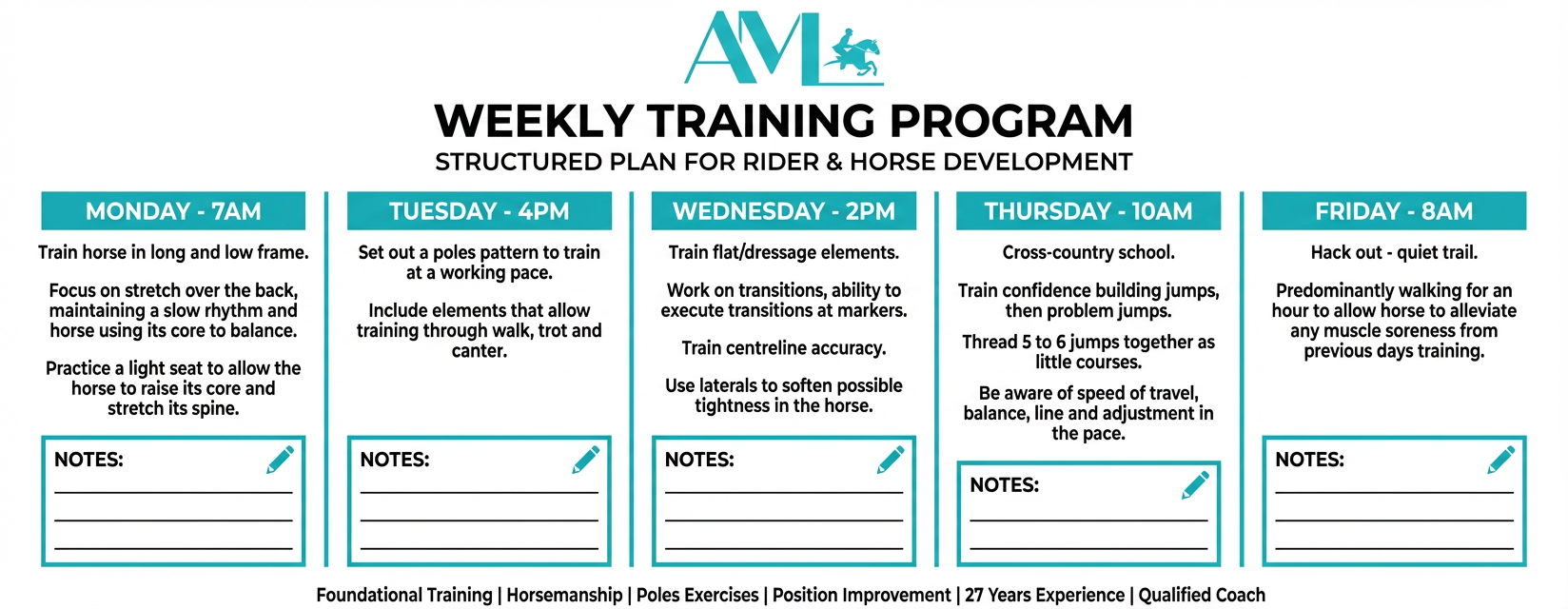
Example of a basic five-day training calendar.