

When Your Horse Lacks Proprioception
When a horse lacks proprioception—they switch off or naturally lack awareness to certain areas of their body —their movement becomes unbalanced, heavy, or uncoordinated, they can brace and stiffen down one side, dish or paddle in their movement, avoid proper hoof placement, twist through their neck or spine, stumble, lack co-ordination and struggle to travel straight.
Understanding why a horse has disconnected from certain parts of its body is the key to choosing the right conditioning strategy.
Here is a targeted guide on how to structure pole work to rebuild your horse's proprioception based on the root cause of their body disconnect.
Why Horses Disconnect: Understanding the Causes
Before laying out a single pole, you must identify what is causing your horse to "turn off" specific muscle groups or limbs:
Pain & Learned Protection: Following an injury, a horse may continue to guard or compensate for a healed area out of habit, uneven muscle development from over compensating or fear of pain. These ‘symptoms’ can remain long after the physical tissue has repaired if the psychological issue isn’t addressed.
Adrenaline & Flight Response: High-stress environments or anxiety cause high levels of adrenaline. In this state, a horse’s energy channels purely into survival mode—running forward, backwards or spinning sideways —which shuts down thoughtful foot placement and fine motor control.
Greenness or Lack of Education: Young or inexperienced horses often haven't developed full body awareness to the requirements of a confident ridden horse. They haven't yet been guided on how to engage, balance, and intentionally connect their hindquarters to their forehand.
Targeted Pole Exercises by Cause
1. Rebuilding After Injury: Rhythm & Symmetry
When dealing with a horse compensating for past injury, the primary goal is re-establishing equal weight-bearing, symmetrical muscle engagement, and a relaxed rhythm. Avoid complex or sudden turns that might cause the horse to intermittently pause, brace or stiffen.
The Setup: Long, straight lines of evenly spaced ground poles or wide, sweeping curved lines. If you set up a curved line of poles, ensure the curve isn’t too sharp. Curved lines that train rhythm are only slightly curved. Your sharper curved lines of poles are more of a test for the rider to maintain rhythm while training suppleness and strength. Be careful to use the right type of curved line for the purpose of your training.
How It Works: Straight lines encourage equal stride length and require both sides of the body to work evenly, helping to break learned compensation patterns. Large curved lines gently encourage lateral flexibility without throwing off the horse's rhythm. Raising the poles slightly off the ground not only increases the physical intensity of the exercise to improve mobility and strength, but it also requires a large degree of mental focus from the horse to move their body in a way that is unfamiliar.
Focus: It is the riders job to maintain a slow tempo, allowing the horse time to find a fluid, symmetrical rhythm over the poles. Letting them rush through flat and fast is counterproductive.
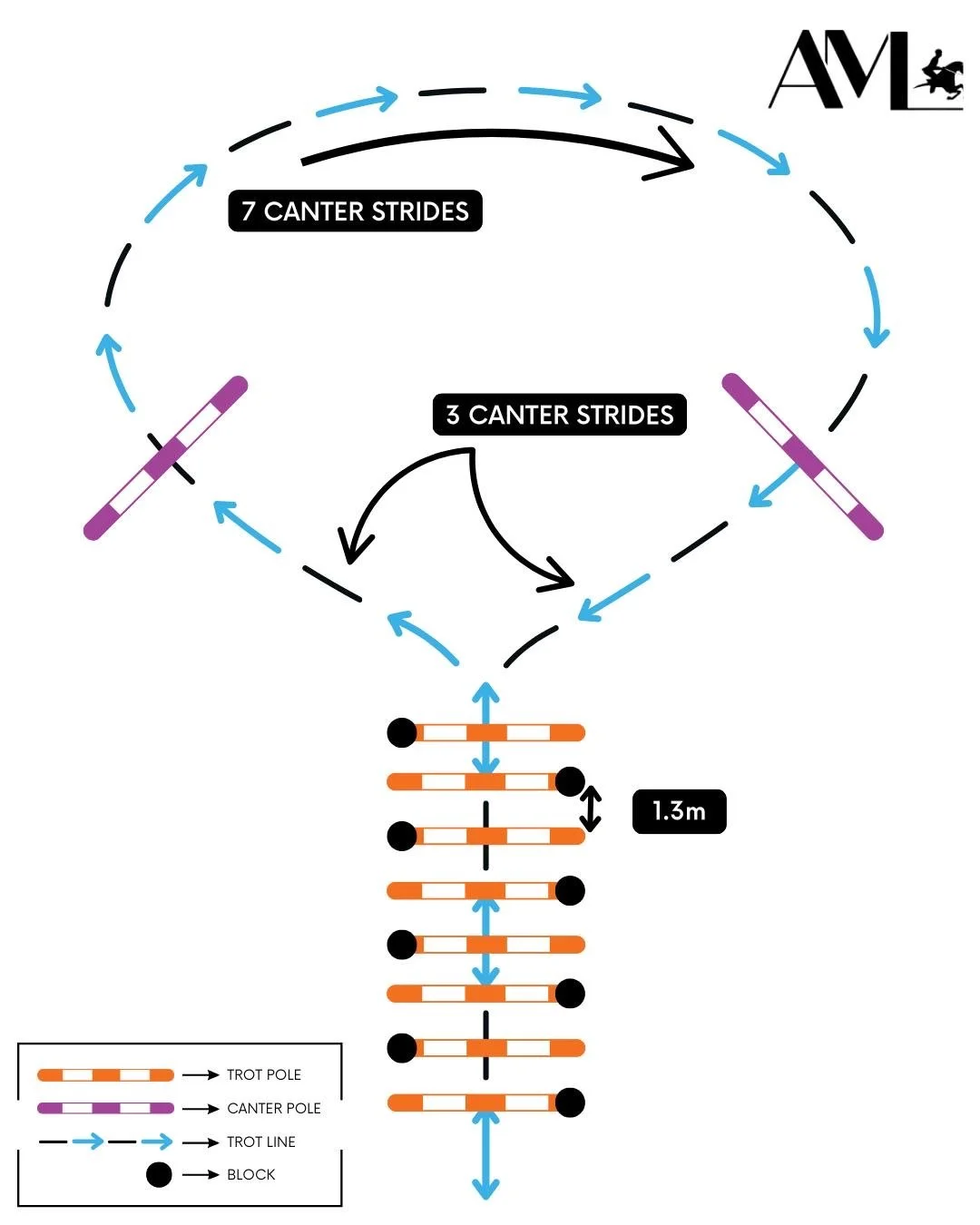
Use a pattern like this to train the horse to use its body evenly. Ensure you set your distances appropriate to your individual horses needs. This graphic indicates a standard 1.30m trot distance but some horse may need a longer or shorter distance for their working trot. It can be scaled right back to walk poles or scaled up to raised trot poles while incorporating a canter transition after the trot line and a single canter pole on either side of the loop. Adjust your training to your horses needs.
2. Overcoming Adrenaline: Technical Focus & Brainwork
When a horse is operating on high adrenaline, they rely on automatic flight mechanics. To bring their focus back to you—and to their own feet—you need exercises that demand deliberate calculation.
The Setup: Technical patterns such as triangles, zig-zags, sharper fan layouts, and frequent changes of direction.
How It Works: Complex geometric patterns require the horse to slow down, process their footing, and calculate stride placement. Frequent changes of rein prevent them from locking into a mindless, rushing rhythm, forcing them to shift weight and engage their core to stay balanced.
Focus: Precision over speed. If your horse opts to purely jump the poles to avoid thinking about how to use their body better, walk them through the pattern several times and slowly add the trot and canter work. If they are particularly determined to avoid the lines of travel as intended, dismount and lead them through the pattern until you have ‘reset’ their point of focus.
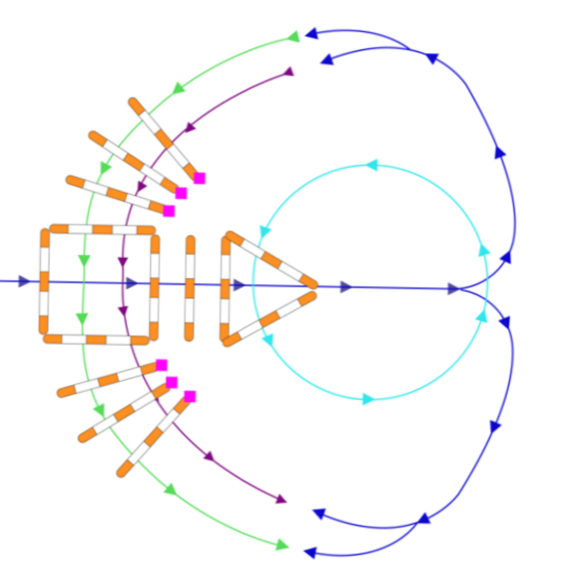
This pattern has been tried and tested as one of my favourite exercises to set up for horses who lack focus, are adrenalised and psychologically disconnect from their body, ready to run. A pattern like this one requires them to change pace, change the shape of their body as they travel and execute transitions. It can be scaled up or down in intensity which makes it a great pattern to start in walk, work through in hand and then ride to its full level of options.
3. Educating the Green Horse: Low Intensity & Simple Calculation
Young or untrained horses easily become overwhelmed by too many visual stimuli. Complex pole grids can cause frustration, stumbling, panic and fear. They need time to develop new brain pathways in how to navigate more complex exercises, so keep it simple at first.
The Setup: Single shapes like a single pole square or a simple triangle setup.
How It Works: Keeping the volume low allows a green horse to process footfall without physical or mental overload. Stepping into and out of a square or navigating a single triangle forces them to adjust their frame and calculate leg placement differently from their automatic, default gait. Asking them to take different lines of travel through each set up, asks them to think more about how to place their feet without tripping, therefore creating improved proprioception and body awareness.
Focus: Quality over quantity. A few clear, thoughtful passes through a simple shape yield far better neurological engagement than a long grid of poles for the green or young horse.
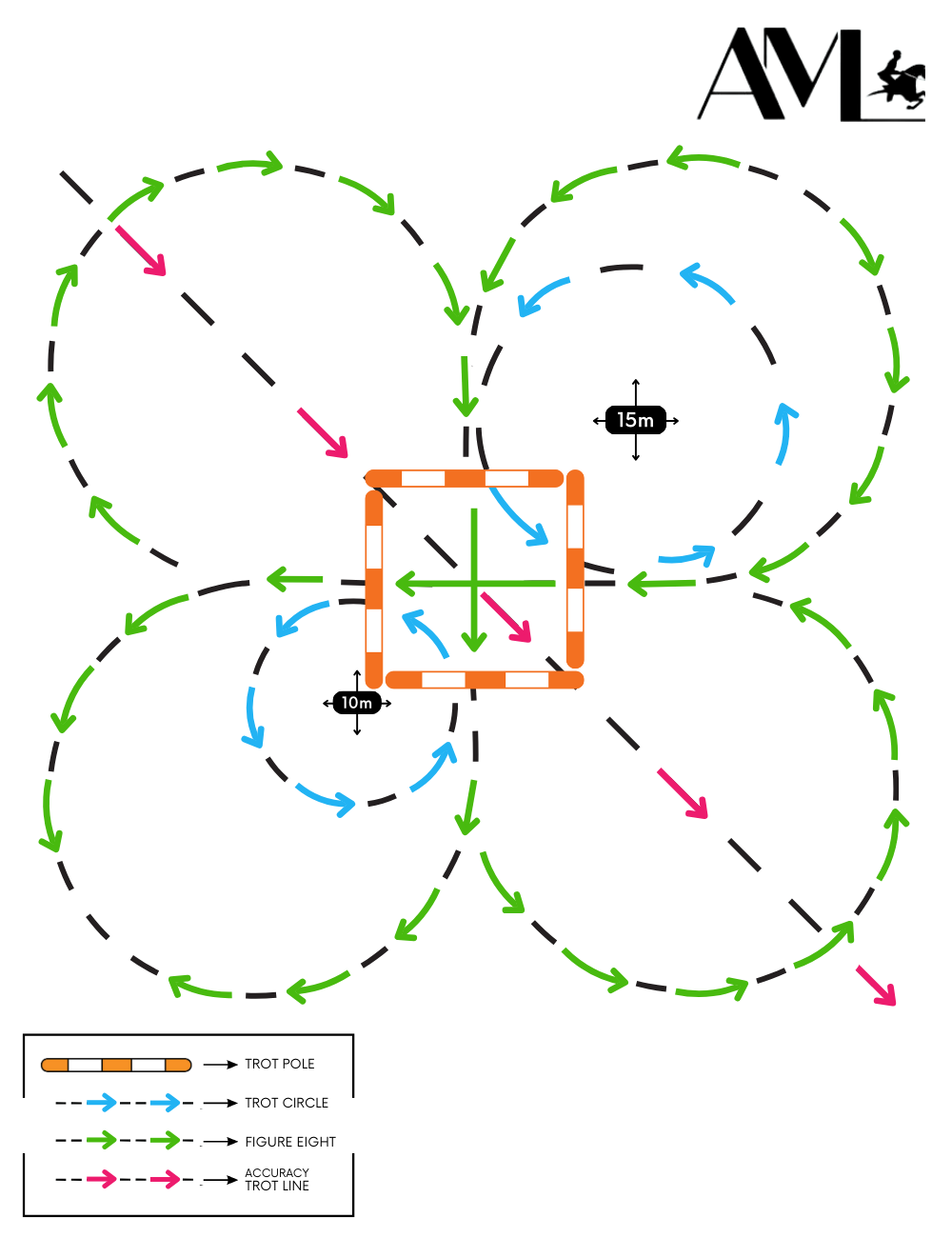
A simple square is a great option for training young or green horses when asking them to be more mentally connected to their body. While it’s a small amount of poles, the lines are technical enough to ask more of them mentally but not so much it causes overwhelm.
Strategic Training for Better Results
Not all pole work is created equal. Simply placing poles on the ground and riding over them won't automatically fix body awareness issues—the real transformation happens when you are strategic about the patterns you select for your horse's specific needs.
By intentionally tailoring your pole configurations to address pain history, mental state, or training level, you directly target the nervous system. Improving your horse's proprioception pays off across every aspect of their athletic life: they will jump cleaner, carry themselves with better balance, improve mobility, and become noticeably easier and more responsive to train.
If you would like more guidance on what polework suits your horse best then check out my PDF with 50 different patterns ranging from small to large, simple to complex. 👉 https://www.amlequestriancoaching.com.au/50polepdf
Still need more help? Then jump into my AML Horse Conditioning System members community to really nail your foundation training, improve your horses physically while training them to be mentally confident under saddle as well as becoming better in your own horsemanship skills! 👉 https://www.amlequestriancoaching.com.au/aml-horse-conditioning-system